

 Română
| (February 12, 1928, Chisinau, Republic of Moldova)
Chemist, scientific area: quantum chemistry, physical chemistry.
|
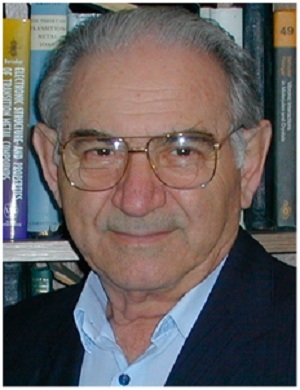 |
Academician Isaac Bersuker was born on 12 February 1928 in Chișinău into a family of craftsmen. In 1952, he graduated from the Faculty of Physics and Mathematics of Chișinău State University, and in 1957 completed his doctoral studies at Leningrad State University. Between 1953 and 1959, he worked at the Teachers’ Institute of Soroca and at the “Alecu Russo” State Pedagogical Institute of Bălți.
In 1959, at the invitation of Iachim Grosul, the first President of the Academy of Sciences of Moldova, he joined the Institute of Chemistry, where he fully demonstrated his exceptional talent as both a researcher and an organizer of scientific investigations. From 1962 to 1964, he served as Deputy Director of the Institute of Chemistry for Scientific Affairs. After defending his Doctor Habilitatus dissertation in Physical and Mathematical Sciences in 1964, he established the Laboratory of Quantum Chemistry, which he headed for nearly thirty years, until 1993. Isaac Bersuker founded the Scientific School of Quantum Chemistry in the Republic of Moldova.
Academician Isaac Bersuker is the only scientist from Moldova whose research resulted in a registered scientific discovery, entered into the USSR State Register of Scientific Discoveries in 1978 under the title “The Phenomenon of Tunnel Splitting of the Energy Levels of Polyatomic Systems in the State of Electronic Degeneracy.” He made fundamental contributions to the development of the general theory of the Jahn–Teller effect, the vibronic theory of ferroelectricity, the semi-empirical quasirelativistic method for molecular system calculations, and the electron-conformational method for predicting structure–activity relationships. He also made significant advances in the study of vibronic effects in chemical reactivity and spectroscopy.
His research in coordination chemistry has been particularly influential through the application of the fundamental principles of quantum mechanics to elucidate problems related to chemical reactivity, the electronic structure of reacting molecules, activated complexes, transition states in catalysis, and the modeling of molecular systems containing transition metals. Professor Isaac Bersuker also proposed the use of the computational electron-conformational method for pharmacophore identification and the prediction of biological activity in pharmaceutical research.
Overall, Isaac Bersuker is the author of more than 600 scientific publications. His scientific ideas have been continued by numerous disciples, including 50 PhD graduates and 10 Doctors Habilitati, whom he supervised with exceptional dedication and care. Among his distinguished former students are Doctors Habilitati Boris Tsukerblat, Beniamin Vehter, Victor Polinger, Serghei Borșci, and Mihail Kaplan. His former students are currently employed in leading research centers in France, Belgium, Spain, the United States, Israel, and Türkiye.
Since 1993, Isaac Bersuker has served as Professor at the University of Texas at Austin (USA). The results of his scientific research have been presented at more than 150 international conferences and symposia, and he has delivered invited lectures at approximately 40 universities worldwide. He is a member of numerous international scientific societies and serves on the editorial boards of several prestigious scientific journals in his field. Although he has spent much of his time in the United States in recent years, he has maintained close and continuous collaboration with the Academy of Sciences of Moldova by contributing to the acquisition of international research grants, participating in joint research projects, supporting young scientists through international research internships, providing scientific consultations, and reviewing scientific manuscripts.
In recognition of his outstanding scientific achievements, Academician Isaac Bersuker was awarded the State Prize, the Order of Honour, the David Ben-Gurion Medal (Israel), and the L. A. Chugaev Medal of the Russian Academy of Sciences. In 1992, the International Biographical Centre in Cambridge (United Kingdom) honored him with the title “Man of the Year.”
References
- Bersuker, I. Electronic Structure and Properties of Transition Metal Compounds. Introduction to the Theory. John Wiley & Sons, 2009, 760 pag.
- Editors: Boggs, James and Polinger, Victor. The Jahn-Teller effect and beyond. Selected Works of Isaac Bersuker with Commentaries. Published by Academy of Sciences of Moldova. Tipografia Academiei de Ştiinţe a Moldovei, 2008,398 p.
- Bersuker, I. B.; Polinger, V. Z. Vibronic Interactions in Molecules and Crystals. Springer-Verlag, Heidelberg, 1988, 385 p.
- Ed. Bersuker, I.B. The Jahn-Teller Effect. A Bibliographic Review. IFI/Plenum, New York, 1984, 590 p.
- Берсукер, И. Б.; Полингер, В. З. Вибронные взаимодействия в Молекулах и кристаллах. Наука, Москва, 1983 336 с.
- Bersuker, I. B. Electronic Structure and Properties of Coordination Compounds. Introduction to the Theory (Russ.). Second Edition, Chemistry, Leningrad, 1976, 350 p.
- Academia de Științe a Moldovei. Academicieni și membri corespondenți. Duca Gh. (coord.), Chișinău, 2015, 192 p.
- Vlad, P. Ed. The Institute of Chemistry of the AS MSSR (1959-1984 years). Stiinta: Chisinau, 1987, 145 p. (in Russian).
- Aricu A., Nastas R., Cocu M. The Institute of Chemistry at 60 years anniversary. Brief history, achievements and perspectives. Chemistry Journal of Moldova, 2019, 14(1), p. 8-31. doi: http://dx.doi.org/10.19261/cjm.2019.349.